
 RESEARCH ARTICLES
Introduction
In Canada, November is recognized as Radon Action Month. Radon gas is produced by the radioactive decay of radium-, thorium-, and uranium-bearing soils and bedrock across the country, particularly through the Prairies. Approximately 1 in 20 people exposed to high concentrations of radon are at risk of developing lung cancer. This risk increases to 1 in 3 among people who smoke.
For Indigenous peoples, the link between housing conditions and health is well established. Unknown exposure to radon gas adds another layer of complexity to housing-related health concerns.
What is Radon?
Radon is a naturally occurring colourless, tasteless, and odourless radioactive gas. It forms deep underground when uranium and thorium in rocks and soil decay into radium, which in turn breaks down into radon gas.
Is Radon Harmful?
Radon is the second leading cause of lung cancer worldwide and is estimated to cause 3% and 14% of all lung cancers. In Canada, radon is estimated to cause 3,200 deaths per year.
Radon is also the leading cause of lung cancer among people with a limited tobacco smoking history or those who have never smoked tobacco at all.
Radon Exposure: How it Happens

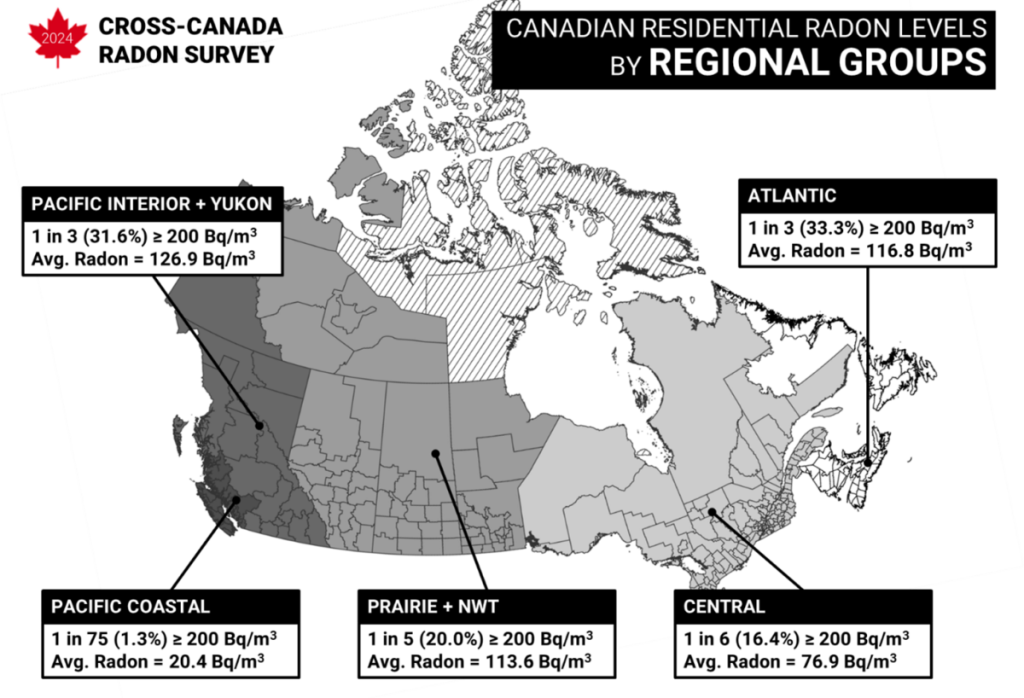
Nearly 1 in 5 Canadian single-detached, semi-detached, and row-type residential buildings are at or above 200 Bq/m³ radon (Source: Cross Canada Radon Survey, 2024).
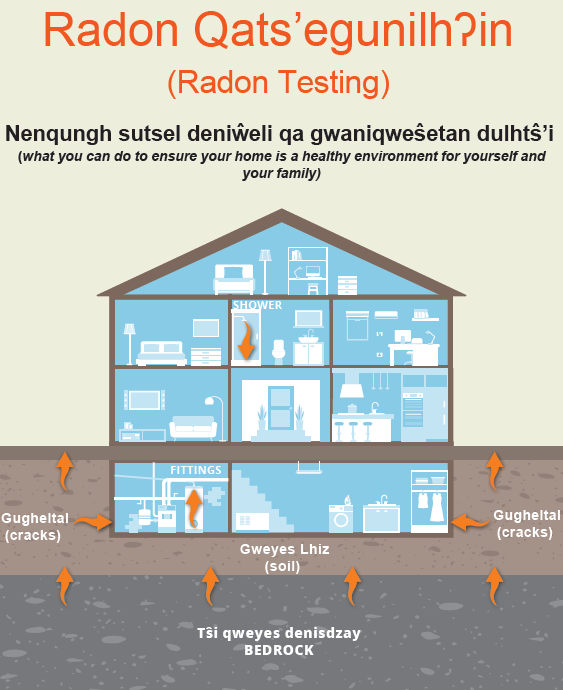
Radon can be found in soil, groundwater, and building materials. Indoor exposure, especially in homes, workplaces, and schools, is the greatest concern. Radon moves from underground to the Earth’s surface through the soil and enters buildings through cracks, gaps, or structural openings, where it can accumulate, and even moderate concentrations pose health risks.
Radon is most deadly when it becomes trapped in low or negative-pressure areas, such as basements, crawl spaces, or buildings with inadequate ventilation.
Because Canadian homes are tightly sealed due to geography and weather, radon can accumulate to dangerous levels.
To limit radon exposure indoors and to potentially reduce the health risks associated with radon exposure, Health Canada recommends mitigating radon levels in homes and buildings that test above 200 Becquerels per cubic metre (Bq/m3). Mitigation strategies can include sealing entry points, improving ventilation, and installing active depressurization systems.
What Factors Influence Radon Levels in Canadian Buildings?
Radon levels vary widely across Canada. Several key factors influence exposure risk:
Region: Canada has some of the world’s most abundant uranium-bearing geology, making high indoor radon more common. Some regions, particularly the Prairies, tend to have higher levels overall.
Community: Rural and lower-density communities in Canada generally have higher radon levels than nearby urban areas. Research indicates that rural communities relying on groundwater wells have residences with higher radon levels than those in nearby urban dwellings.
Building design: Emerging research indicates that newer homes in Canada often have higher radon concentrations. Factors include foundation type, ventilation systems, building materials, and energy-efficient sealing that reduces air exchange.
How Radon Impacts Indigenous Communities in Canada
Research specific to on-reserve radon exposure is limited, but several radon-related risk factors are known to be disproportionately high among Indigenous communities. These radon-related risks include:
Inadequate Housing Conditions
Housing conditions for Indigenous Peoples across Canada are well documented to be inadequate or substandard, with the Assembly of First Nations (AFN) estimating approximately 60% of First Nations housing to need minor or major repairs, and 10% needing complete replacement, for example. According to Statistics Canada (2018):
- Indigenous people are more likely to live in crowded homes than non-Indigenous people.
- They are twice as likely as non-Indigenous people to live in dwellings requiring major repairs.
- They are three times more likely to report mould, mildew, or undrinkable water than non-Indigenous people.
Housing is a critical determinant of health. Inadequate housing, combined with radon exposure, increases the risk of physical and mental health concerns.
Tobacco Use
Radon exposure interacts synergistically with tobacco use, dramatically increasing lung cancer risk. Among Indigenous people in Canada, the prevalence of smoking has not dramatically decreased. In 2012, it was estimated that 50% of First Nations adults and young adults smoked daily. A 2020 study found that American Indian/Alaska Native and Canadian First Nations populations have the highest rates of commercial cigarette smoking in North America.
Given these combined factors, the future cancer burden is expected to be high among First Nations communities, especially in on-reserve housing. Indigenous people living off-reserve and in substandard or overcrowded housing also face elevated risks and require targeted radon awareness and mitigation efforts.
Examples of Radon Awareness and Mitigation in Indigenous Communities
Community-Led Testing and Remediation
Some First Nations have initiated radon projects that combine awareness, testing, and mitigation.
For example, the Neqotkuk (Tobique First Nation) in New Brunswick received funding from the First Nations Environmental Contaminants Program to test radon levels in 33 randomly selected homes. Conducted with the New Brunswick Lung Association, the project provided mitigation resources for affected homes and collected household data through voluntary participation and questionnaires. Post-remediation testing results indicate that these activities successfully reduced radon concentrations in all 24 participating homes that required mitigation.
Culturally-Specific Training and Information
To support community readiness, the need for culturally-specific resources has been identified. The First Nations Health Authority (FNHA) in British Columbia, for example, has spearheaded the translation of radon information and mitigation materials into First Nations languages. Research has also indicated the growing recognition of the need for culturally tailored radon education and training programs.
Food for Thought: Could Federal Radon Legislation Help?
Radon policy in Canada currently exists as a patchwork of shared jurisdiction across municipal, provincial/territorial, and federal regulations. Many laws either indirectly address radon or omit it entirely, despite radon being a significant indoor air contaminant.
A potential path forward is comprehensive federal legislation designed to standardize radon awareness, testing, and mitigation. This could include:
1. Mandatory Testing and Mitigation Standards
- Requirements for radon testing in both new and existing buildings, including on-reserve housing
- Harmonization of standards across building codes, regulations, guidelines, and practices found in, for example, the National Building Code of Canada, provincial/territorial laws, regulations, policies, and municipal by-laws and codes.
2. Public Awareness Requirements
- Federally coordinated education campaigns.
- Targeted outreach in high-risk and underserved communities, including Indigenous communities that are particularly affected by higher radon levels.
3. Certification Requirements
- Identification and promotion of C-NRPP certified radon professionals and devices.
- Requirements for certified professionals in all mitigation work.
4. Dedicated Funding
- Financial support for low-income households to access testing and mitigation.
- Funding for community-based radon programs in high-risk areas, including reserves.
Final Thoughts: Keep Radon on Your Radar
Although Radon Action Month ends in November, radon awareness and mitigation should continue year-round. Reducing radon levels in homes, schools, workplaces, and community buildings is vital to lowering radon-related lung cancer risk among both Indigenous and non-Indigenous populations in Canada.
To learn more or take action, explore resources from:








Share the article