
 RESEARCH ARTICLES
Introduction
Despite decades of federal funding and targeted programming, gaps in educational attainment between Indigenous and non-Indigenous learners in Canada remain persistent. For example, just 63% of First Nations youth have completed high school, compared to 91% of the non-Indigenous population, and only 49.2% of Indigenous adults aged 25–64 hold a post-secondary credential, compared with 68% of non-Indigenous adults.
These disparities are often framed as policy failures: insufficient funding, ineffective programs, or gaps in service delivery. However, this framing obscures a more fundamental issue: a key challenge facing Indigenous education in Canada is not primarily one of policy design, but the legacy of colonial governance. Education continues to operate within a system where authority over standards, funding, accountability, and long-term planning largely rests with the federal, provincial, and territorial governments.
While First Nations, Inuit, and Métis communities may administer schools or specific education programs, they do so within externally imposed frameworks that limit their jurisdiction and local, culturally informed decision-making. Self-determination in education, understood as the transition from government management to Indigenous jurisdiction and control, is therefore essential to closing education gaps and advancing reconciliation.
This blog explores the history of federal control over education for Indigenous peoples, the limits of policy reform in the absence of jurisdiction, and the impact of Indigenous-led education governance models across Canada.
Colonial Foundations of Education Control
Government control over the education of Indigenous Peoples in Canada is deeply rooted in the legacy of the Indian Residential School system. Education was deliberately used as a tool of assimilation, premised on the belief that European settlers had the authority to determine what Indigenous children would learn, which languages they would speak, and which cultures would be valued. This system sought not only to replace Indigenous knowledge systems but to disrupt Indigenous governance, kinship structures, and community continuity.

Although federally funded Residential Schools officially closed in 1997, the governance logic that enabled them – centralized control, external standards, and limited Indigenous authority – continues to shape education policy today, particularly through federally imposed funding formulas, administratively exhaustive reporting requirements, and policy frameworks designed without Indigenous perspectives of governance or jurisdiction at their core.
Federal Control and the Limits of Program Reform
In 1972, the National Indian Brotherhood (now the Assembly of First Nations) released the Indian Control of Indian Education policy paper, outlining key areas for radical reform. Considered a pivotal document, the paper asserted Indigenous self-determination and the right of First Nations to design education systems reflecting their specific values, histories, and languages.
The federal government officially adopted its principles in 1973, which became the basis for departmental education policy, marking a radical shift from previous assimilationist policies. The policy acknowledged that while Canada retained a responsibility to fund education, control over its design and delivery should rest with First Nations communities and authorities. This vision led to the growth of First Nations-operated schools and Indigenous institutions of higher learning across the country.
Decades later, however, federal involvement continues to extend beyond funding oversight. Most Indigenous education systems operate under short-term contribution agreements that prioritize compliance and reporting rather than long-term planning and outcomes. Funding levels are often insufficient and inflexible, failing to account for remoteness, infrastructure needs, language revitalization, or the true costs of culturally grounded education systems. The AFN, in particular, has noted slow policy implementation and ongoing challenges, particularly regarding adequate and equitable funding relative to provincial systems.
Post-secondary supports illustrate these limitations clearly. The Post Secondary Student Support Program (PSSSP), which provides funding for tuition and education-related costs, has historically been underfunded, resulting in waitlists and restricted access to higher education resources despite students meeting eligibility requirements. The federal approach, evident in programs like the PSSSP, treats education as an individual benefit rather than a collective investment in Indigenous governance, economic development, and community well-being.
These shortcomings align with the findings of the Truth and Reconciliation Commission of Canada (TRC). Calls to Action 11 and 62 through 65 emphasize the need for equitable funding, Indigenous control of education systems, and inclusion of Indigenous knowledge and cultures. Without addressing self-determination and advancing Indigenous jurisdiction within education, these Calls remain stalled or only partially fulfilled.
Jurisdiction and Rights-based Education Governance
Recent legislative developments offer a path forward. Bill C-15, which affirms the United Nations Declaration on the Rights of Indigenous Peoples (UNDRIP) in Canadian law, establishes a rights-based framework for Indigenous self-determination. UNDRIP explicitly recognizes Indigenous Peoples’ rights to establish and control their own education systems, including the authority to teach in Indigenous languages and transmit Indigenous knowledge. Implementing UNDRIP in education requires more than consultation or co-design; it requires Canada to recognize Indigenous jurisdiction and support Indigenous-led systems over the long term.
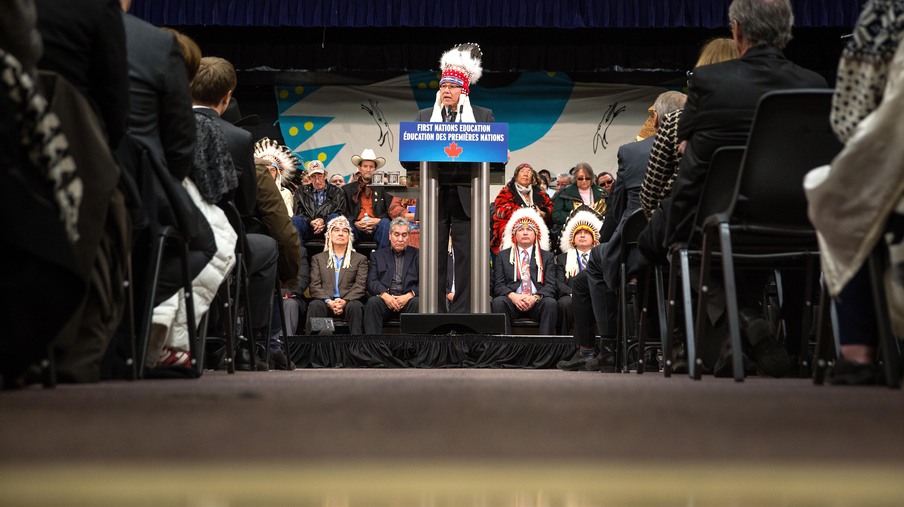
The Indigenous Institutes Act (2017) and the Indigenous Institutes Consortium of Ontario provide one example of this shift. By recognizing Indigenous Institutes as a distinct “third pillar” of post-secondary education – alongside traditional colleges and universities – the province has enabled Indigenous-led institutions to grant credentials grounded in Indigenous knowledge systems. Institutions such as Six Nations Polytechnic are no longer required to seek validation through external accreditation structures that may not reflect Indigenous educational priorities. Instead, rigorous quality assurance can be provided through Indigenous-led models, including international Indigenous accreditation bodies, such as the World Indigenous Nations Higher Education Consortium.
Indigenous Governance in Practice: Evidence from Across Canada
Jurisdictional approaches to Indigenous education are not theoretical. They are already producing measurable results in education systems from coast to coast to coast.
For the First Nations Education Authority (FNEA) in British Columbia, participating First Nations have exercised collective jurisdiction over K–12 education through a legally recognized governance framework. This model establishes standards, certification, and accountability under First Nations authority rather than via federal administration. Since the agreement’s implementation in 2022, participating Nations have reported improved graduation and five-year completion rates, higher course completion, and stronger long-term educational outcomes. These gains reflect the stability and coherence that jurisdictional authority enables.
Similarly, the Mi’kmaw Kina’matnewey in Nova Scotia represents one of the most comprehensive Indigenous education governance models in Canada. Governed by Mi’kmaq communities, the system oversees curriculum development, language programming, teacher support, and data collection across participating First Nations. Education is treated as a continuum, from early childhood through post-secondary pathways, rather than as disconnected programs. Mi’kmaw Kina’matnewey’s results include higher attendance rates, improved graduation outcomes, and increased participation in post-secondary education, alongside strengthened language and cultural continuity. The focus on the design and implementation of language programming and delivery for First Nations students in Nova Scotia is particularly noteworthy, given the linkages between language inclusion and revitalization and higher levels of well-being among First Nations students.
Beyond Programming: The Possibilities of Jurisdiction
What unites these models is not a particular program or curriculum, but governance. Indigenous authority over decision-making, standards, and long-term planning has enabled education systems to reflect community priorities and respond to local needs.
Indigenous jurisdiction over education allows Nations to align learning systems with broader social, economic, and cultural goals. When communities control education governance, they can design pathways that support local labour needs, environmental stewardship, language revitalization, and self-government capacity. Education becomes an instrument of nation-building rather than a narrowly defined social service.

This alignment has broader implications. Nations with stronger education systems experience improved family and community health outcomes, increased employment, and reduced reliance on short-term funding and social programs. When Nations choose what programs and degrees to offer to their students, they can also target specific occupations that meet labour needs on-reserve. These impacts contribute to lower public expenditures related to poverty, justice involvement, and crisis-based interventions. Indigenous control of education is therefore not only a matter of rights and reconciliation, but a sound long-term investment that reduces systemic costs.
Final Thoughts
Closing education gaps in Canada requires a structural shift from government management of Indigenous education to the recognition of Indigenous and First Nations jurisdiction.
Regional Education Funding Agreements, once viewed as a “solution” by Canada but recently sidelined, should be understood by all stakeholders as “stepping stones” or transitional mechanisms rather than end points. Long-term progress will depend on statutory recognition of Indigenous education authorities, equitable and predictable funding arrangements, and Nation-to-Nation agreements that replace contribution-based models.
Until Indigenous and First Nations governments are empowered to design, govern, and sustain their own education systems, disparities in educational outcomes will persist. Advancing Indigenous jurisdiction over education is not only essential to reconciliation but also foundational to building a more equitable and resilient future for all communities and citizens in Canada.









Share the article